
Low Carbon Aluminum
A data-based way to reduce the carbon footprint of aluminum-based packaging in packaging, without modifying existing product designs, processes, or production lines.
Why Low Carbon Aluminum matters?
Aluminum is widely used in flexible packaging due to its barrier performance, formability, and recyclability. However, conventional primary aluminum production is energy‑intensive and typically associated with comparatively high CO₂eemissions.
Low Carbon Aluminum refers to aluminum with a verified, reduced cradle‑to‑gate product carbon footprint (PCF), achieved through the use of renewable electricity, recycled content, or both. The material maintains the same technical functionality as conventional aluminum.
Constantia Flexibles currently supplies Low Carbon Aluminum for applications such as dairy, processed foods, pharmaceuticals, and battery components. These long‑standing uses demonstrate the material’s technical suitability in established packaging formats.
What defines Low Carbon Aluminum?
Low Carbon Aluminum is aluminum with a third party verified CO₂e footprint, which is reduced compared to conventional market averages. Reductions are typically achieved through:
- Use of renewable energy in primary production
- Use of recycled aluminum, which generally requires 95% less energy than primary production
- A certified mass‑balance system enabling transparent allocation of reduced‑carbon inputs
Want to know more?
Reach out to your counterpart at Constantia Flexibles or send a request to our experts.







Why leading brands choose Constantia Flexibles
Leading brands choose to work with Constantia Flexibles because we provide documented and independently verified product carbon footprint values, supported by long‑standing supply chain partnerships that ensure reliability and consistency.
Our materials demonstrate proven technical performance in commercial applications, giving customers confidence that product functionality remains unchanged. In addition, we offer structured support for Scope 3 emissions reporting and broader decarbonization strategies by supplying traceable, audit‑ready data.
Our approach is aligned with both current and upcoming EU requirements for transparent and substantiated environmental claims, helping customers communicate material‑related information responsibly and in line with regulatory expectations.

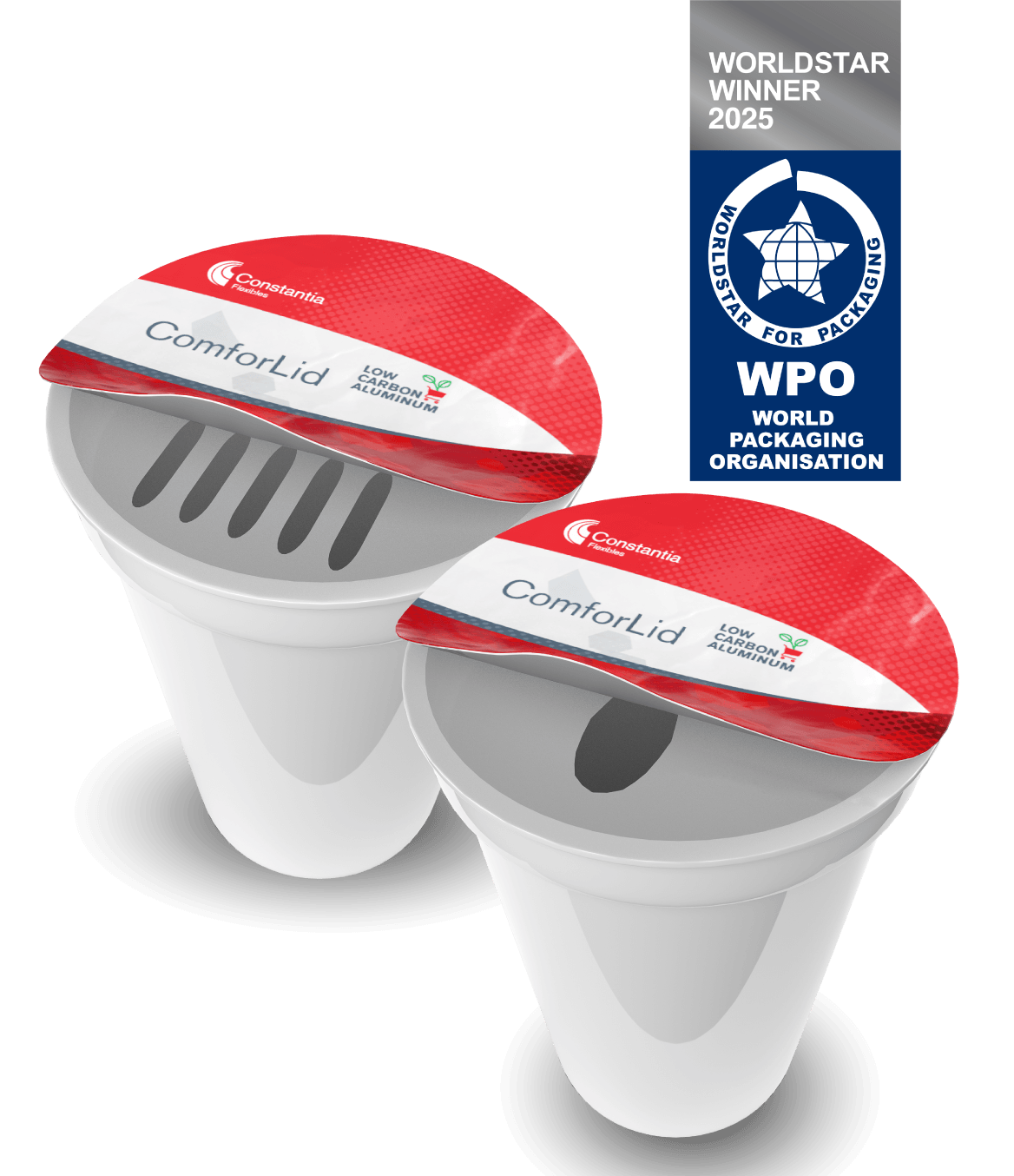
Reduction of the aluminum layer from 50 μm to 45 μm
Reduction of the coextruded PP layer from 40 g to 35 g
Use of verified Low Carbon Aluminum
Global Warming Potential (GWP) of specification in KgCO2e/m2 (cradle-to-gate)
100%
Standard ComforLid (Alu 50 µ / CoEx 40 g)
90%
Downgauged ComforLid (Alu 45 µ / CoEx PP 35 g)
57%
Downgauged ComforLid with Low Carbon Aluminum (Low Carbon Aluminum 45 µ / CoEx 35 g)
Get expert support on Low Carbon Aluminum
Frequently Asked Questions (FAQ)
The Packaging and Packaging Waste Regulation (PPWR) is an EU law that sets common rules for how packaging is designed, used, and managed across all EU countries. It entered into force on 11 February 2025 and will generally apply from August 12, 2026. It provides an overall framework, while more detailed rules will be further specified through secondary legislation.
The regulation applies to all packaging and packaging waste, regardless of material or origin. It aims to reduce packaging waste and make all packaging recyclable on the EU market. It increases the share of recycled content used in packaging and therefore reduces dependence on virgin raw materials.
Further information here: Packaging waste - Environment - European Commission
Yes. Technical performance such as barrier properties and formability remains unchanged.
Via third‑party validation (e.g., TÜV Süd), ISO‑aligned methodologies, and a certified Mass Balance system.
It reduces the cradle‑to‑gate PCF of the aluminum component. Total package impact depends on all materials and life‑cycle stages.
How we ensure credibility
Our approach is grounded in traceability, transparent documentation, and independent verification. All supplier data must follow recognized international PCF methodologies to ensure a consistent basis for calculation.
Our calculation methodology for determining the product carbon footprint is independently verified by TÜV Süd, an accredited third‑party body, ensuring that the underlying approach and data basis meet recognized international standards. To maintain methodological integrity, we apply a certified mass‑balance system that links the volume of low‑carbon input purchased to the amount attributed to our output.
Our sourcing practices also align with the principles of the Aluminium Stewardship Initiative (ASI), supporting responsible production and improved material traceability across the value chain. In addition, product carbon footprints are validated using standards such as ISO 14067 and ISO 22095, ensuring that all communicated values are derived from structured and internationally recognized frameworks.
Collectively, these measures help ensure that all information we provide is based on documented, verifiable, and transparently communicated data.
